


Culturally Relevant Books 101: A Beginner’s Guide to Mastering Your Child’s In-Home Library

Hey there! If you’ve ever walked into a room and felt instantly at home because you saw things that reminded you of your own family, your own culture, or your own dreams, then you already understand the magic we’re trying to create at The Bookshelf Project.
We’re on a mission to put that same feeling of belonging and excitement right into the hands of our kids. How? By helping families build in-home libraries filled with culturally relevant children's books.
Setting up a bookshelf isn’t just about interior design; it’s about literacy equity. It’s about making sure that Black and brown children see themselves as the heroes, the scientists, the dreamers, and the everyday kids in the stories they read. Whether you’re just starting your child’s collection or looking to refresh their shelves, this guide is your "101" on mastering the art of the in-home library.
Why Culturally Relevant Books are Game-Changers
You might have heard the phrase "mirrors and windows" when people talk about diverse literature. It’s a concept pioneered by Dr. Rudine Sims Bishop, and it’s the heartbeat of what we do.
Mirrors: Books that reflect a child’s own life, heritage, and identity. When a child sees a character who looks like them or shares their cultural traditions, it validates their existence. It says, "You matter. Your story is worth telling."
Windows: Books that offer a view into someone else’s life. These help all children develop empathy and understand the beautiful, multicultural world we live in.
For Black and brown children, the "mirror" part has historically been missing from the shelves. Research shows that as recently as 2018, only about 10% of children's books featured Black characters. Even more concerning is that many of those stories focused solely on struggle: slavery, civil rights battles, or hardship.
While those stories are vital parts of history, they aren't the only stories. To master your child's library, you need to find books that celebrate "Black Livingness": the everyday joy, the family dinners, the trips to the park, and the universal magic of being a kid.
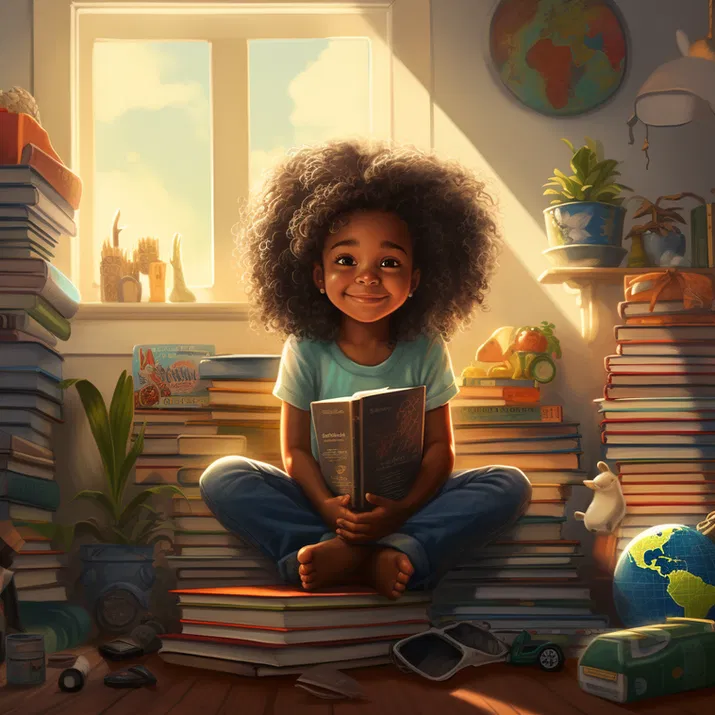
Selecting the "Right" Stories for Your Shelf
Building a library doesn't mean buying every book with a diverse cover. It’s about curation. When you’re selecting culturally relevant children's books, here are a few things to look for:
1. Look for Authenticity
Is the story told from an "insider" perspective? Check the author and illustrator. Are they from the community being described? Authentic voices bring nuances to the table: the way a grandmother’s kitchen smells, the specific rhythm of a neighborhood, or the pride in a certain hairstyle: that make the story resonate deeper.
2. Prioritize Joy and "The Everyday"
Make sure your library isn't just a history lesson. Look for books where the plot has nothing to do with race but the characters just happen to be Black or brown. Think about stories like Lola Goes to School or Happy Hair. These books normalize the presence of diverse characters in all walks of life, which is crucial for a child's confidence and sense of self.
3. Celebrate Heritage and History
Of course, heritage is a huge part of the mix! Choose books that highlight the richness of African, Caribbean, Latin American, and other cultural backgrounds. Whether it’s folktales, stories of great inventors, or modern-day celebrations of community, these books provide the roots your child needs to grow tall.
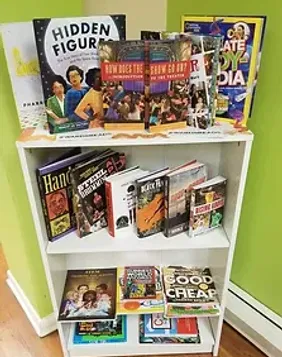
The Science of Access: Why "In-Home" Matters
At The Bookshelf Project, we aren't just giving away books; we’re following the evidence. Research consistently shows that book access is pivotal for successful reading development.
It’s simple: children who have greater access to print materials at home express more enjoyment of books and perform better academically. An in-home library removes the "barrier to entry." There’s no need for a car ride to the library or a walk to the bookstore. The stories are right there, within reach, at 7:00 AM or 9:00 PM.
When a child has their own bookshelf, they develop a sense of ownership over their learning. They can revisit their favorite characters whenever they want, which builds the "reading muscle" and fosters a lifelong love for literature.
Practical Steps for Building In-Home Libraries
Ready to get started? You don’t need a massive room or a huge budget to create a powerful reading nook. Here’s how to master the setup:
Step 1: Find the Right Spot
Your library should be accessible. For young children, this means books should be at eye level. A small corner of the living room, a low shelf in their bedroom, or even a sturdy basket can serve as a library. The goal is to make the books a natural part of their daily environment.
Step 2: Organize for Discovery
Forget the Dewey Decimal System! Organize books in a way that makes sense to your child. You can group them by color, by "feel" (like "bedtime stories" vs. "adventure stories"), or by character. Face some of the books outward so the covers are visible: covers are like tiny movie posters that entice kids to "watch" the story.
Step 3: Keep it Dynamic
A library is a living thing. Rotate books in and out. If your child is obsessed with space one month, bring those books to the front. As they grow, swap out board books for picture books and eventually early readers.
Step 4: Add Comfort
A library isn't just about the shelves; it’s about the experience. Add a soft rug, a few pillows, or a small chair. You want this to be the coziest spot in the house: a place where they feel safe and inspired to get lost in a story.
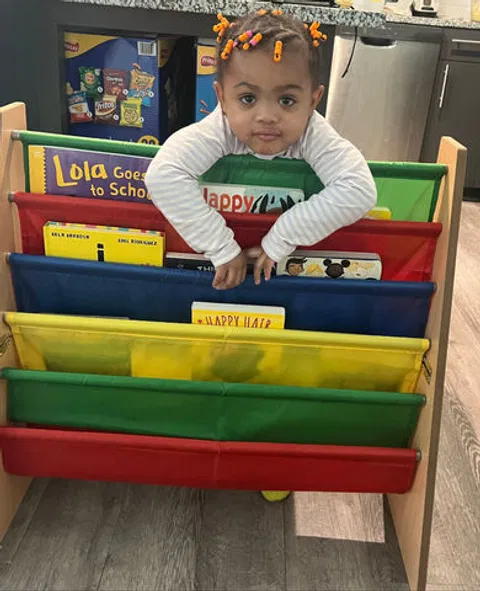
Literacy Equity: A Community Effort
We know that for many families, building a library from scratch can be a financial challenge. That’s exactly why we do what we do. We work with community partners to identify families and provide complete bookshelf setups: bookshelves, culturally relevant books, and all.
Literacy equity means that every child, regardless of their zip code or background, deserves to see themselves in the pages of a book. It means breaking down the systemic barriers that have kept diverse stories out of the hands of the kids who need them most.
If you’re a parent, start small. One book a month adds up to a library in a few years. If you’re a community member looking to help, consider donating to organizations that specialize in distributing these specific types of resources.
Final Thoughts: The Gift that Keeps on Giving
Mastering your child’s in-home library is one of the greatest gifts you can give them. It’s a gift of identity, a gift of knowledge, and a gift of joy. By choosing books that act as mirrors and windows, you’re not just teaching them to read: you’re teaching them to see the world, and themselves, in all their vibrant, beautiful complexity.
So, let’s get those shelves filled! Whether it’s a story about a magical adventure or a simple book about a boy getting a haircut, every book is a brick in the foundation of your child’s future.
For more tips on literacy and to see how we’re helping families across the community, visit us at The Bookshelf Project. Let’s build something great together!
Comments