


The 2-Year Rule Explained: Why In-Home Libraries are the Best Early Literacy Intervention

Updated: Apr 21
hero_image: https://cdn.marblism.com/EqUWLupi64w.webp

Have you ever wondered what the single biggest predictor of a child’s academic success is? You might think it’s the quality of their school, their family’s income, or even their parents’ level of education. While those things matter, researchers have discovered something much more tangible: and much easier to change: The number of books in the home.
At The Bookshelf Project, we talk a lot about "literacy equity." But what does that actually look like in practice? It looks like The 2-Year Rule.
If you’ve never heard of it, don't worry: most people haven't. But understanding this rule is the key to seeing why building in-home libraries isn't just a "nice to have": it’s a revolutionary early literacy intervention that can change the trajectory of a child's life forever.
What Exactly is the 2-Year Rule?
The "2-Year Rule" comes from a massive, 20-year longitudinal study led by sociologist M.D.R. Evans. Researchers looked at 27 different countries to see how home environments impacted a child’s ultimate education level.
The findings were staggering: in the United States, children who grow up in homes with a significant number of books (around 500) stay in school for an average of 2.4 years longer than children from "bookless" homes.
Think about that for a second. Two and a half years.
That is the difference between:
Dropping out of high school vs. graduating.
Having a high school diploma vs. completing an Associate's degree.
Starting college vs. finishing a full four-year Bachelor's degree.
This isn't just a minor "boost." It’s a complete shift in a child’s educational ceiling. The presence of books in the home was found to be just as influential as the parents’ education level. This means that even if a parent didn't have the chance to finish school themselves, they can give their child the same academic advantage simply by building in-home libraries.
Why In-Home Libraries Are the Ultimate Intervention
We often think of literacy as something that happens at school. We wait until a child is five or six years old, put them in a classroom, and hope for the best. But literacy development begins the moment a child enters the world.
Here is why having books at home is the most effective early literacy intervention:
1. It Normalizes "The Culture of Reading"
When books are a permanent fixture in a child's bedroom or living room, reading stops being a "chore" done at school and starts being a lifestyle. Research shows that children who have easy access to print materials express more enjoyment in books and academics overall. They see books not as intimidating academic tools, but as friends, adventures, and mirrors of their own lives.
2. It Bridges the "Book Desert" Gap
In many underprivileged communities, especially those serving Black and brown families, we see what experts call "book deserts." These are neighborhoods where there are few, if any, places to buy books, and public libraries might be a bus ride away. By delivering complete bookshelf setups directly to families, we eliminate the physical barrier to access.
3. The Power of Ownership
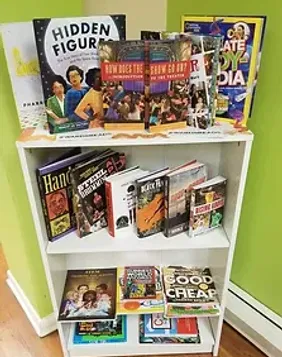
There is a massive psychological difference between borrowing a book from a library and owning one. When a child owns a book, they can read it a hundred times. They can see their own name written on the inside cover. They can tuck it under their pillow. At The Bookshelf Project, we ensure children get culturally relevant books: stories where they see characters who look like them and experience lives like theirs: because representation is the spark that turns a reader into a lifelong learner.
The Importance of Reading at Home (Even for 5 Minutes)
You might be thinking, "Do I really need 500 books to make a difference?"
Here’s the good news: No.
The Evans study also found that the biggest "jump" in educational attainment happens between having zero books and having just 20 books. Even a small collection of 20 to 50 books has a statistically significant impact on a child’s literacy outcomes.
The importance of reading at home cannot be overstated. It’s about the "pro-knowledge" environment. When a child sees their parents or siblings valuing books, their brain starts to wire itself for curiosity. Even five minutes of shared reading a day: pointing at pictures, naming colors, or following a storyline: builds the vocabulary and attention span needed for future academic success.
Breaking the Cycle of Literacy Inequity
For Black and brown children from underprivileged backgrounds, the stakes are even higher. Systemic barriers often mean these children start school behind their peers in terms of vocabulary and print exposure. This "readiness gap" can follow them for the rest of their lives.
This is why The Bookshelf Project exists. We aren't just giving away books; we are providing the infrastructure for success. Our model is evidence-based because we know that simply telling parents to "read more" isn't enough if they don't have the books to read.
By providing in-home libraries, we are giving families the tools to implement the 2-Year Rule in their own living rooms. We are helping them ensure that their children aren't just "ready" for school, but are prepared to excel far beyond it.
How You Can Help Implement the 2-Year Rule
Building a home library is a journey, not a one-time event. If you are a parent, a donor, or a community partner, here is how you can support this mission:
Prioritize Culturally Relevant Books: Children are more likely to engage with stories that reflect their own identities. Look for books that celebrate diverse heroes, history, and daily life.
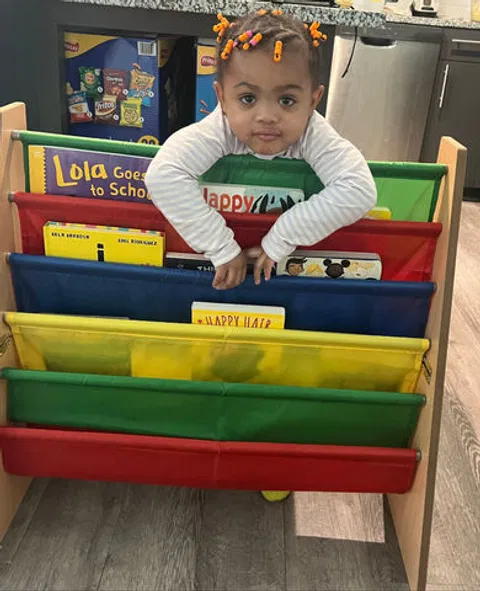
Make Books Accessible: Don't keep books on a high shelf where they stay "neat." Put them on a child-sized bookshelf where they can be reached, touched, and even a little bit worn out from love.
Support Literacy Equity: You can help us bring the 2-Year Rule to more families. Whether through a corporate partnership or by volunteering as a "Bookshelf Artisan," your contribution directly places libraries in the homes of children who need them most.
Closing the Gap, One Shelf at a Time
The 2-Year Rule tells us that books are the most powerful tool we have to break the cycle of poverty and educational inequity. It tells us that 2.4 extra years of schooling are sitting right there, waiting to be unlocked by a few rows of stories.
At The Bookshelf Project, we believe every child deserves a home filled with stories. We believe every child deserves to see themselves as the hero of their own narrative. And we know that when we provide the books, the children provide the brilliance.
Let’s close the gap together.
Are you ready to help us build the next generation of readers? Visit www.thebookshelfproject.org to learn how you can donate, volunteer, or partner with us to bring in-home libraries to children in our community.
Comments