


Why 3rd Grade Reading Matters: The Direct Path to College for Black Boys


If you walk into a third-grade classroom, you’re looking at a room full of potential doctors, engineers, and community leaders. But according to educational researchers, you’re also looking at a crystal ball.
There is a moment in every child’s life known as the "3rd Grade Pivot." Up until the end of third grade, kids are mostly learning to read. They are sounding out words, mastering phonics, and getting comfortable with the mechanics of language. But once they hit fourth grade, the script flips: they are now reading to learn.
If a child isn't reading proficiently by that pivot point, the curriculum doesn't wait for them. Science, history, and even math problems suddenly require a level of reading comprehension they haven't mastered. For many Black boys in our communities, this isn't just a school hurdle: it’s the start of a "literacy-to-college" pipeline that is currently broken.
At The Bookshelf Project, we believe that changing the trajectory of college enrollment for Black men starts long before the SATs or college applications. It starts with a bookshelf in a bedroom.
The 3rd Grade Cliff: By the Numbers
The statistics are a wake-up call for anyone invested in education equity. Currently, about 44% of Black students read below grade level in 3rd grade. When we look specifically at Black boys, the challenge becomes even more acute.
Why does this specific year matter so much? Because 3rd-grade reading proficiency is the single most reliable predictor of whether a student will graduate from high school and, ultimately, enroll in college.
The Dropout Risk: A student who can't read proficiently by 3rd grade is four times more likely to drop out of high school.
The Poverty Multiplier: For Black boys living in underprivileged communities, that risk doesn't just double: it explodes. Poor readers from low-income backgrounds are six times more likely to leave school without a diploma.
The College Gap: Currently, there is a significant gap in higher education. Only about 26% of Black men hold a college degree, compared to 38% of Black women.
When we talk about the "low enrollment" of Black men in college, we have to look at the literacy bottleneck that happens a decade before they would even apply. If you can't navigate a high school textbook, the door to a college campus feels like it’s been locked from the inside.
The "Belief Gap" and Representation
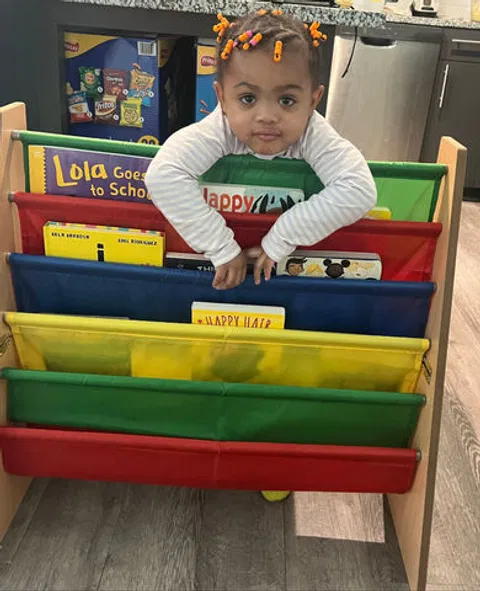
It isn’t just about the mechanics of reading; it’s about the connection to reading. For many Black boys, the books they encounter in school don't reflect their lives, their heroes, or their hair. When a child doesn't see themselves in the pages of a book, they begin to view reading as a chore: or worse, as something that "isn't for them."
This is what we call the "Belief Gap." When students disengage from reading because it feels culturally irrelevant, their proficiency scores drop. When their scores drop, the system often lowers its expectations for them. It’s a cycle that leads away from the university gates and toward lower academic outcomes.
To break that cycle, we have to provide books that act as both mirrors and windows. Mirrors that reflect their own greatness, and windows that show them the path to the future they want.

Why the In-Home Library is the Secret Weapon
You might wonder why The Bookshelf Project focuses so heavily on in-home libraries rather than just school programs. The reason is grounded in research: access is everything.
Studies have shown that the number of books in a home is a stronger predictor of a child’s educational attainment than their parents’ income or social status. Having books within arm's reach changes a child’s identity. They stop being a "student who struggles with reading" and start being a "reader."
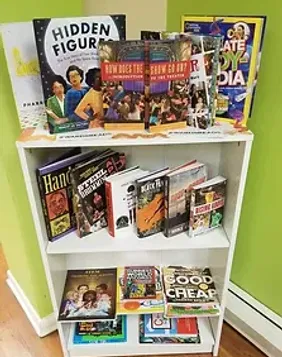
By providing complete bookshelf setups and filling them with culturally relevant books, we are effectively moving the "Admissions Office" into the living room. We are giving Black boys the tools they need to navigate the 3rd Grade Pivot and stay on the path toward higher education.

How We Can Change the Narrative
The link between early literacy and college enrollment is clear, but it’s not set in stone. We can change these numbers by intervening early and often. Here is how we’re making it happen:
Breaking Barriers to Access: We work with community partners to identify families who need these resources most, ensuring that a child's zip code doesn't determine their reading level.
Curating for Connection: Every book we distribute is selected to be culturally relevant. We want every Black boy who opens a book from The Bookshelf Project to see a hero who looks like him.
Grounding in Evidence: Our model isn't just about "feeling good": it's evidence-based. We know that children with greater access to print materials express more enjoyment of academics overall.
When we give a child a bookshelf, we aren't just giving them furniture. We are giving them a foundation. We are telling them that their education matters, that their stories matter, and that the path to college is wide open for them.
Join the Project
The journey to a college degree doesn't start with a graduation cap; it starts with a bedtime story. By supporting literacy for Black boys today, we are investing in the leaders, thinkers, and college graduates of tomorrow.
If you believe that every child deserves a library of their own, there are so many ways to get involved:
Donate: Your contributions help us purchase bookshelves and high-quality books for families.
Volunteer: Join us as a Literacy Builder or Bookshelf Artisan to help us deliver these libraries to the community.
Partner: If you're part of a community organization or childcare center, let’s work together to identify families in need.
Let’s turn the "3rd Grade Pivot" from a point of struggle into a point of pride. Together, we can build a direct path to college, one bookshelf at a time.
Want to learn more about our mission? Visit www.thebookshelfproject.org to see how we’re changing lives through the power of books.
Comments