


Why Reading for Pleasure is the Ultimate Equity Tool

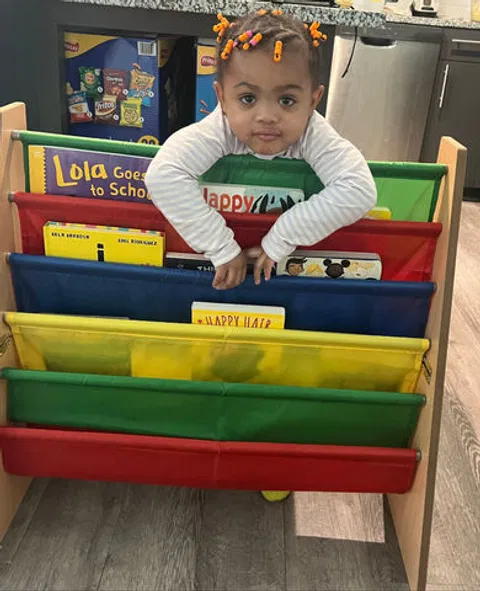
At The Bookshelf Project, we’ve always known: deep in our gut: that a child with a book in their hands is a child with a superpower. We see it every time we deliver a new bookshelf to a home in DC. We see the spark in a kid’s eyes when they realize that "Hidden Figures" or "Lola Goes to School" isn't just a school assignment, but a gateway to a whole new world.
But lately, the science has finally caught up to what we’ve been seeing on the ground.
If you’re a data nerd like us, you’ve probably heard of the ABCD Study (Adolescent Brain Cognitive Development). It’s the largest long-term study of brain development and child health in the United States, following nearly 12,000 children as they grow from age 9 to young adulthood.
A recent deep dive into this data has revealed something groundbreaking: Reading for pleasure isn't just a "nice to have": it is a fundamental brain-builder. And more importantly for our mission, it’s a powerful tool for equity.
The Neuroscience of Joy: What the ABCD Study Found
Researchers looked at over 10,000 young adolescents and compared those who started reading for pleasure early in life (between ages 2 and 9) with those who started later or didn’t read for pleasure at all.
The results weren't just "good": they were staggering. Kids who read for pleasure early on showed:
Larger Brain Volumes: We’re talking about actual physical growth in regions of the brain responsible for memory, attention, and executive function.
Better Mental Health: These children reported lower levels of stress, depression, and anxiety.
Higher Cognitive Performance: They scored significantly better on tests for verbal learning and memory.
Think about that for a second. Picking up a book and reading it just because you want to literally changes the physical architecture of your brain. It’s like a workout for the mind that builds a more resilient, capable, and happier human being.

The "Leveling Up" Effect: Why This is an Equity Issue
Here is the part that really gets us excited at The Bookshelf Project: The benefits of reading for pleasure are robust across all income and education levels.
In many studies, the results are skewed by "socioeconomic status", basically, kids from wealthier families tend to have better outcomes because they have more resources. But the ABCD Study found that the positive impact of reading for pleasure was so strong that it actually helped bridge the gap.
We call this Neuro-Equity.
When we talk about "equity" in education, we often focus on school funding or teacher ratios. But neuro-equity starts at home. If we can ensure that a child in an under-resourced neighborhood has the same access to high-quality, culturally relevant books as a child in a wealthy suburb, we are giving them the tools to literally "level up" their own brain development.
The study showed that about 48% of the participants had little experience with reading for pleasure or started much later. These aren't just statistics; these are kids living in "book deserts": neighborhoods where access to print materials is virtually non-existent. When a child doesn't have books at home, they aren't just missing out on stories; they are missing out on the neurological benefits that those stories provide.
Books vs. Screens: The Battle for the Cortical Area
Let's get real: we're all competing with screens. Whether it’s tablets, phones, or TVs, the average kid is spending a lot of time in front of a digital display.
The ABCD data gave us a pretty clear comparison here. While reading time was linked to increased brain volume and better cognitive performance, excessive screen time showed the opposite trend. High levels of TV and video consumption were linked to lower cognitive performance and, in some cases, decreased cortical area.
This isn't about being "anti-tech." It’s about balance. The study found that about 12 hours of reading per week was the "sweet spot" for maximum brain benefit. Our goal is to make those 12 hours as easy and inviting as possible by putting the books right in the child’s bedroom.
Culturally Relevant Books: The Secret Sauce
You might be wondering: How do we get kids to actually want to read for 12 hours a week?
The answer is simple, but often overlooked: Representation.
At The Bookshelf Project, we don't just hand out any random books. We curate libraries filled with culturally relevant books. When a Black or brown child sees themselves as the hero of the story: the scientist, the astronaut, the adventurer: reading stops being a chore and starts being an act of self-discovery.
Research shows that children are far more likely to engage in "reading for pleasure" when the stories reflect their own lives and identities. By providing books like Hidden Figures or Happy Hair, we aren't just teaching literacy; we’re fostering a culture of reading.
This culture is what leads to those 12 hours a week. It’s what leads to the brain development discovered in the ABCD Study. It’s what leads to neuro-equity.

Ending Book Deserts in DC and Beyond
The mission of The Bookshelf Project is to break down the barriers to book access. We work with community partners and dedicated volunteers (shoutout to our Literacy Builders and Bookshelf Artisans) to identify families who need us most.
We deliver complete bookshelf setups: solid wood, beautifully built, and stocked with a diverse starter library that the children get to keep forever. These aren't borrowed books from a library that have to be returned; these are "forever books." They are assets. They are the seeds of a home library that can change the trajectory of a child's life.
When you support our work, you aren't just buying wood and paper. You are investing in the physical brain health of children in our community. You are helping us turn "book deserts" into blooming landscapes of opportunity.

Join the Movement for Neuro-Equity
The ABCD Study has given us the evidence, but we need the community to provide the action.
Whether you want to Donate to support a new library, sign up for a Corporate Day of Service, or simply spread the word about the importance of reading for pleasure, you are playing a part in this mission.
Let’s stop treating literacy as just a school subject and start treating it as the ultimate equity tool. Every child deserves a brain that has been shaped by the joy of a good book.
Ready to help us build the next library?Learn more about our mission here.

Comments